

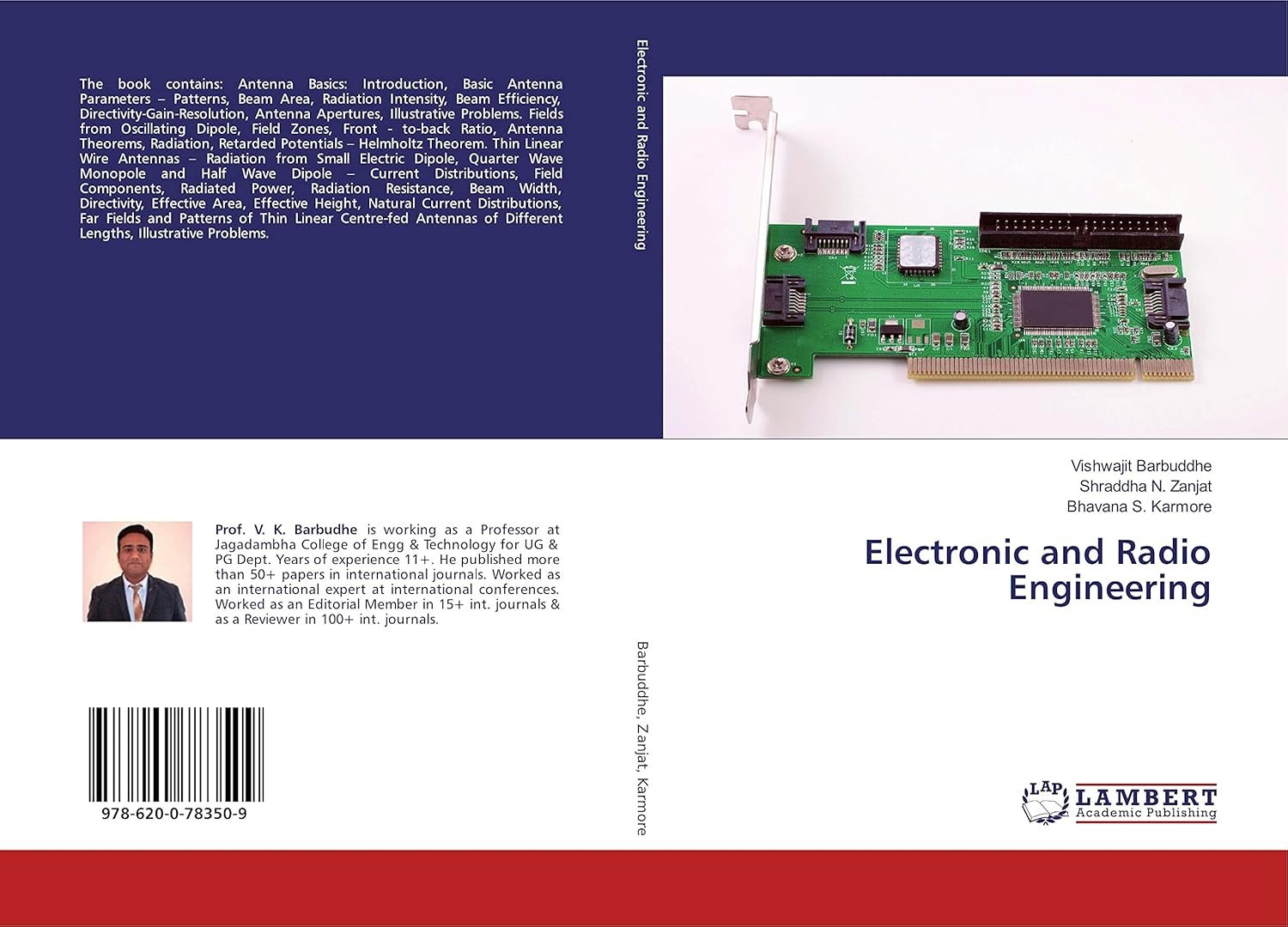
Electronic and Radio Engineering
Discover why Electronic and Radio Engineering stands out among similar products.
Learn about its key features, benefits, and real performance.
What Makes Electronic and Radio Engineering Special?

Review of "Electronic and Radio Engineering"
Overview
The field of electronic and radio engineering is a vital aspect of modern technology that transcends everyday life—from communication systems to advanced radar technologies. The book titled "Electronic and Radio Engineering", published by LAP LAMBERT Academic Publishing on March 2, 2020, sets out to demystify these subjects, with a particular focus on antenna theory and design. Spanning 156 pages, this text presents vital information, illustrative examples, and theoretical insights that aim to cater to students and professionals alike.
Key Features
-
Comprehensive Framework:
The book begins with the foundational elements of antennas, including key parameters such as patterns, beam area, radiation intensity, and beam efficiency. By laying this groundwork, it ensures that readers grasp the basics before diving into more complex concepts. -
Practical Problems:
The illustrative problems included throughout the text serve as practical examples to solidify understanding. By applying theory to real-world scenarios, readers can develop problem-solving skills essential for engineering applications. -
In-depth Theoretical Concepts:
Topics such as the fields from oscillating dipoles, front-to-back ratios, and antenna theorems are tackled with clarity. These concepts may seem daunting at first glance, but the author’s structured approach makes them accessible. -
Thin Linear Wire Antennas:
A substantive focus on thin linear wire antennas is a highlight of this book. From exploring the radiation patterns of small electric dipoles to quarter-wave monopoles and half-wave dipoles, the text provides an exhaustive breakdown of current distributions, field components, and gaps in knowledge that many existing texts may overlook. - Illustrative Problems:
The inclusion of practical problems throughout the book encourages engagement and deeper understanding. These problems not only offer the reader a practical application of theoretical concepts but also help in preparing for actual engineering challenges.
Quality, Materials, and Design
From a material and design perspective, "Electronic and Radio Engineering" presents a clean and readable layout. The dimensions of 15 x 0.91 x 22 cm make it a practical size for either desk work or travel, making it feasible to keep on hand for references during consulting sessions or study breaks.
The quality of the print is commendable, and the diagrams and illustrations, although somewhat basic, are effective in conveying complex concepts. The organization of the chapters follows a logical progression that allows readers to build their knowledge incrementally.
Strengths and Weaknesses
Strengths:
-
Structured Learning Path: The clear organization of topics allows readers to start from the basics and progressively engage with more complex aspects, which is essential for effective learning in technical subjects.
-
Pragmatic Approach: The practical problems interspersed throughout the chapters not only reinforce the theoretical content but also reflect real-world scenarios in electronic and radio engineering— an excellent feature for students.
-
Coverage of Key Topics: Major aspects of antenna theory, such as directivity, radiation resistance, and effective area, are covered meticulously. Therefore, readers looking for comprehensive insights will find substantial content within.
- Accessibility: Despite its academic context, the language throughout the book is generally approachable, making it suitable for both students and beginners in the field.
Weaknesses:
-
Lack of Advanced Topics: While providing an extensive overview, advanced practitioners may find the depth inadequate for specialized studies. Topics such as software simulations or modern applications are minimally explored.
-
Illustration Clarity: Some diagrams could be more detailed, particularly for the more complex topics. A reader without a prior background in antenna theory might find certain graphical explanations insufficient.
- Limited Real-World Applications: While there are practical problems addressed, the book could benefit from a broader range of real-world applications that would further elucidate the theory and invite further engagement.
Ideal User Type and Best Use Cases
"Electronic and Radio Engineering" is primarily aimed at students within electrical engineering or radio technology programs. Those just starting in their studies or professionals seeking to refresh their understanding of fundamental antenna concepts will find this book particularly beneficial.
Best Use Cases:
-
Classroom Resource: The structured layout and included exercises make the book an excellent classroom resource for instructors teaching a module on antennas or radio frequency engineering.
-
Self-Learning: Students or individuals interested in pursuing self-directed learning in electronic and radio engineering will find the book accessible and well-structured, providing a solid foundation upon which to build further expertise.
- Reference Text: Professionals who require a refresher on basic principles or need to reference fundamental antenna theories may find this book a useful addition to their libraries.
Conclusion
In summary, "Electronic and Radio Engineering" by LAP LAMBERT Academic Publishing is a thorough introduction to the field of antenna theory and design. It has its strengths and weaknesses, yet it serves as a valuable educational resource for students and novices in electronic engineering. With its current balance between theory, practical applications, and exercises, it stands out as a commendable starting point for anyone passionate about navigating the complexities of electronic and radio engineering.
Whether used as a textbook or a self-study guide, this book can open doors to a deeper understanding of the crucial role antennas play in contemporary technology. While experienced professionals may need additional resources for more advanced topics, the honest approach to basic antenna theory makes this book a worthwhile investment for its target audience.
Why Choose Electronic and Radio Engineering
- ✅ Designed for convenience and reliability
- 🔍 Offers features that stand out from competitors
- ⚙️ Built with durable, high-quality materials
- 💰 Provides excellent value for the price
Tags
#Electronic #Radio #Engineering