

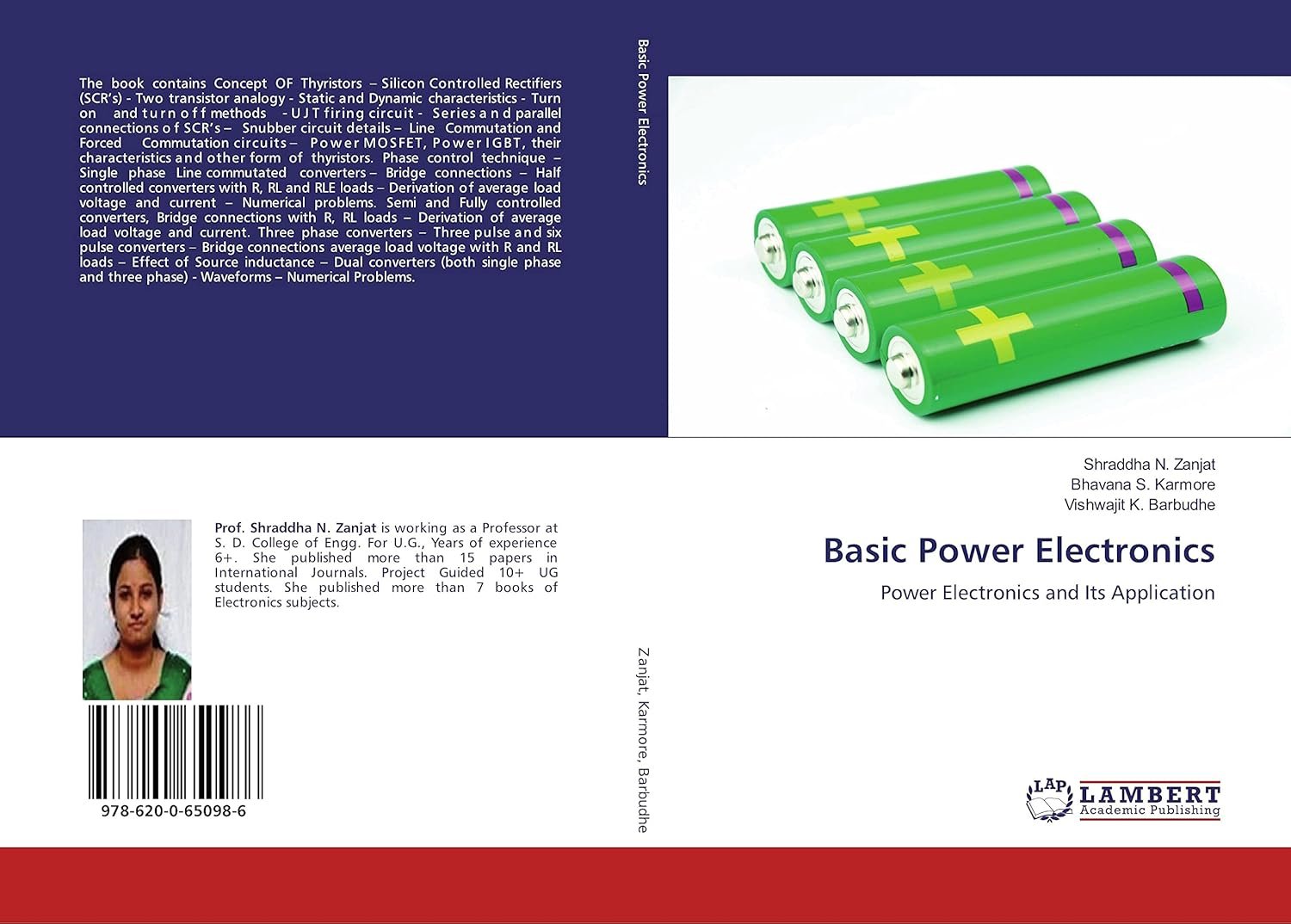
Basic Power Electronics: Power Electronics and Its Application
Discover why Basic Power Electronics: Power Electronics and Its Application stands out among similar products.
Learn about its key features, benefits, and real performance.
What Makes Basic Power Electronics: Power Electronics and Its Application Special?

Review of "Basic Power Electronics: Power Electronics and Its Application"
Introduction
In the contemporary world of electrical engineering, the understanding of power electronics is crucial for both academic and professional success. "Basic Power Electronics: Power Electronics and Its Application" caters specifically to those who wish to delve into the intricacies of power electronics, unabashedly unwrapping complex concepts to reveal their practical applications. This review aims to provide an honest and thorough exploration of the book’s content, usability, quality, and the ideal audience it serves.
Key Features and Usability
Comprehensive Coverage of Thyristors
One of the standout features of this book is its in-depth examination of thyristors and Silicon Controlled Rectifiers (SCRs). The book introduces the Two-Transistor Analogy, simplifying complex behaviors of these components, making it easier for beginners to grasp. Various static and dynamic characteristics of SCRs are elucidated, welcoming readers into the world of power electronics with clarity.
Practical Turn-On and Turn-Off Methods
A significant part of power electronics lies in control mechanisms. The book thoroughly addresses turn-on and turn-off methods, offering vital details on how these processes can be managed effectively using various firing circuits, such as the UJT (Unijunction Transistor) firing circuit. This information is indispensable for anyone working on industrial applications where precise control over switching devices is necessary.
Understanding of Circuit Configurations
The book’s meticulous explanation of series and parallel connections of SCRs, along with detailed insights into snubber circuits, forms an excellent foundation for readers. Understanding these configurations can greatly aid students and practitioners in designing more efficient circuits while avoiding common pitfalls.
Advanced Commutation Techniques
The text dives into both line commutation and forced commutation techniques, providing a thorough grounding that allows readers to understand complex switching operations. Such knowledge is vital for systems that rely on the precise timing of current flow and interruptions.
MOSFET, IGBT and Other Thyristor Forms
In addition to SCRs, the book covers the characteristics and functionalities of other forms of thyristors, including Power MOSFETs and Power IGBTs (Insulated Gate Bipolar Transistors). This broad approach ensures that readers gain exposure to various technologies employed in power electronics, which allows them to make informed design decisions in diverse situations.
Phase Control Techniques
The discussion on phase control techniques for single-phase and three-phase systems is another essential feature. The book delves into line commutated converters, detailing the half-controlled converters with various load types (R, RL, and RLE). The derivation of average load voltage and current in these scenarios arms readers with both theoretical and practical insights.
Numerical Problems
The inclusion of numerical problems throughout the chapters adds a layer of practicality. Readers can apply the theoretical concepts learned, enhancing their understanding and reinforcing their knowledge. This feature significantly aids engineering students who need to develop problem-solving skills.
Quality, Materials, and Design
Structure and Clarity
"Basic Power Electronics" is logically organized, transitioning smoothly between topics—from introductory concepts to more advanced theories and applications. Each chapter builds on the previous one, ensuring a cohesive learning experience. The explanations are clear, avoiding unnecessary jargon that often plagues technical literature.
Visual Aids and Diagrams
The book employs various diagrams and illustrations effectively, assisting in the visualization of complex concepts. This visual representation is particularly beneficial in understanding circuit configurations and characteristics. Although some diagrams can be more detailed, the current layout sufficiently conveys the necessary information.
Quality of Text and Examples
The text quality is commendable, free from significant grammatical errors and inconsistencies. Additionally, real-world examples are seamlessly woven into the narrative, showcasing the practical implications of theoretical concepts.
Materials
While the cover and binding of the book are sturdy, the pages themselves are printed on standard paper. This is adequate for the intended audience, though using higher-quality paper could have enhanced durability, considering the book’s potential for frequent use in academic settings.
Strengths and Weaknesses
Strengths
-
Comprehensive Coverage: The book effectively covers an array of topics in power electronics, making it a valuable resource for both beginners and seasoned professionals.
-
Practical Examples: The numerical problems and real-world applications give readers the chance to apply what they’ve learned, a vital aspect of solidifying knowledge.
-
User-Friendly Approach: The structured and clear layout makes it easy for readers to navigate through complex theories, facilitating better comprehension.
- Diverse Topic Range: By examining various forms of thyristors and their applications, the book prepares readers for the multi-faceted nature of power electronics.
Weaknesses
-
Limited Depth in Some Areas: While comprehensive, certain advanced topics could be explored more extensively for those seeking a deep dive into specific applications.
-
Visuals: Although the diagrams are helpful, some could benefit from further detail or better resolution to aid understanding for complex concepts.
- Absence of Software Aspects: With the increasing importance of simulation tools in power electronics, the book could have included a section on relevant software packages or simulation methods for practical design.
Ideal User Type and Best Use Cases
This book is ideal for:
-
Engineering Students: Especially those pursuing electrical engineering with a focus on power systems and electronics. The structured approach and problem set make it an excellent textbook or reference work.
-
Industry Professionals: Engineers and technicians looking for a practical guide to refresh their understanding or learn about the latest thyristor technologies and applications.
- Academics and Educators: As a comprehensive resource for those teaching power electronics concepts, the book serves as a toolkit for preparing curriculum materials and exercises.
Best Use Cases
-
Course Material: This book can be incorporated into university-level courses covering power electronics and circuit design.
-
Self-Study Resource: Individuals looking to enhance their understanding of power electronics will find this book useful for independent study, enhancing their industry knowledge.
- Reference for Projects: Professionals engaged in designing or troubleshooting power electronics circuits will find the material relevant and applicable to their projects.
Conclusion
"Basic Power Electronics: Power Electronics and Its Application" stands as a valuable asset to anyone involved in the field of power electronics. With its structured approach, practical focus, and comprehensive exploration of critical concepts, the book is well-suited for aspiring engineers as well as seasoned professionals. Despite some minor drawbacks, such as the lack of software components and some lesser detail in specific diagrams, the strengths of the book far outweigh these limitations. Overall, it is a sound investment for anyone serious about mastering power electronics.
Why Choose Basic Power Electronics: Power Electronics and Its Application
- ✅ Designed for convenience and reliability
- 🔍 Offers features that stand out from competitors
- ⚙️ Built with durable, high-quality materials
- 💰 Provides excellent value for the price
Tags
#Basic #Power #Electronics #Power #Electronics #Application