

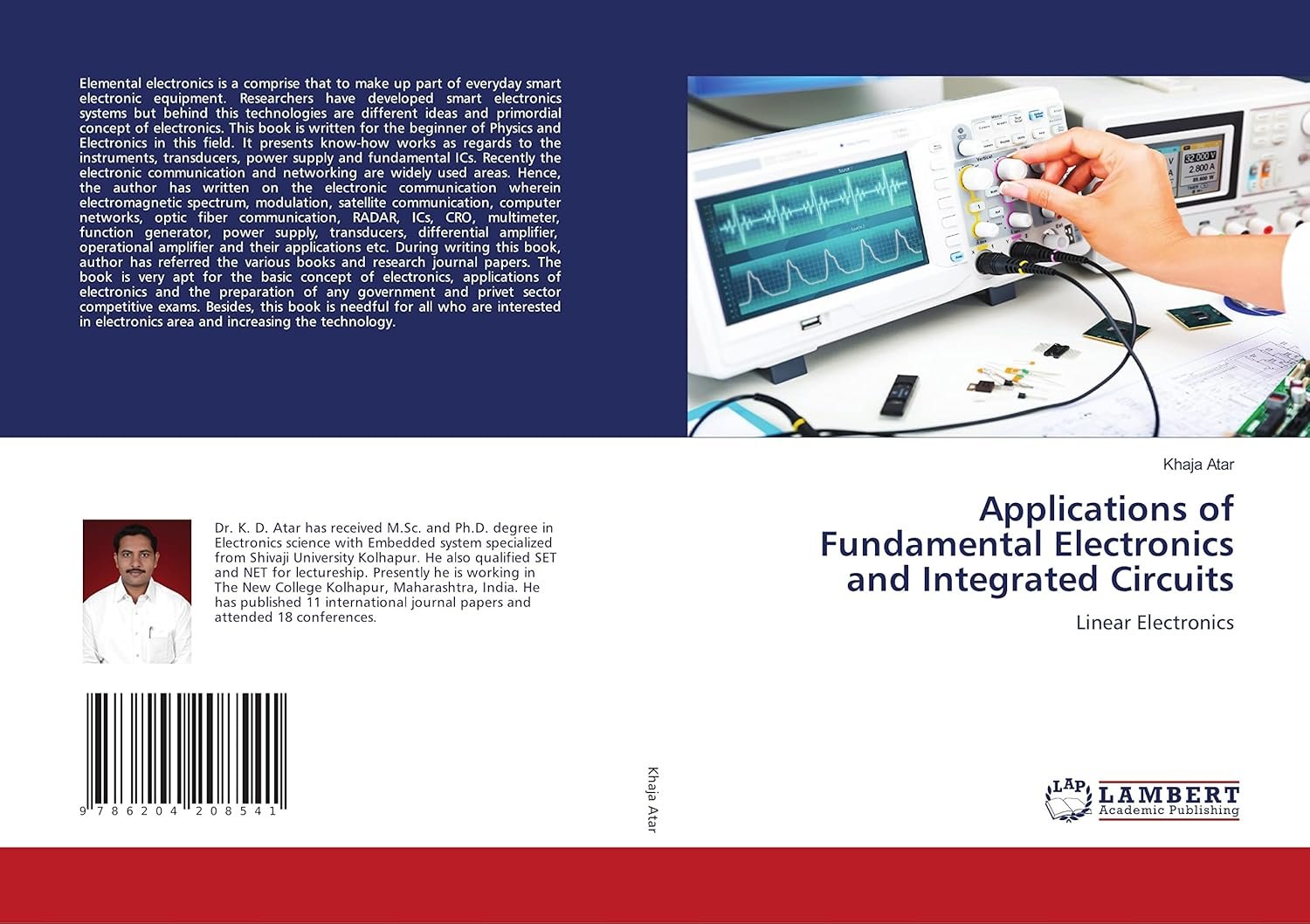
Applications of Fundamental Electronics and Integrated Circuits: Linear Electronics
Discover why Applications of Fundamental Electronics and Integrated Circuits: Linear Electronics stands out among similar products.
Learn about its key features, benefits, and real performance.
What Makes Applications of Fundamental Electronics and Integrated Circuits: Linear Electronics Special?

Review: Applications of Fundamental Electronics and Integrated Circuits: Linear Electronics
In an age dominated by technology, understanding the foundational elements of electronics is essential for both enthusiasts and professionals. The book Applications of Fundamental Electronics and Integrated Circuits: Linear Electronics by LAP LAMBERT Academic Publishing is a comprehensive resource designed primarily for beginners in the fields of physics and electronics. With a focus on fundamental information and practical applications, this book stands as a significant entry point for anyone eager to delve into electronic systems.
Key Features and Real Usability
The text is structured into well-defined sections, each aiming to guide novices through the complex world of electronics. Here are some of the key features:
-
Comprehensive Coverage: The book spans a wide array of topics, including basic instruments, transducers, power supplies, and fundamental integrated circuits (ICs). This diversity allows readers to grasp the essential components of electronic systems, making it a practical guide.
-
Focus on Communication Systems: A notable strength of this book lies in its in-depth discussion on electronic communication and networking. It covers relevant topics such as modulation techniques, satellite communication, and optical fiber communication. These topics are particularly vital in an era where connectivity is paramount.
-
Practical Instruments and Tools: Readers will find a wealth of information about crucial tools like CROs (Cathode Ray Oscilloscopes), multimeters, and function generators. Understanding how to utilize these instruments fosters practical skills that are indispensable in both academic and professional settings.
-
Real-World Applications: The book does an excellent job of connecting theory with practice. From operational amplifiers to differential amplifiers, readers can expect to learn where and how these concepts apply in real-world scenarios, making the material not only educational but also relatable.
-
Preparation for Competitive Exams: The inclusion of competitive exam preparation content is a major advantage. The fundamental concepts laid out in the book can serve as a solid foundation for individuals preparing for government or private sector exams related to electronics.
- Research References: The author has referred to various books and research journal papers during the writing process, providing a well-rounded perspective supported by credible sources. This adds to the book’s value as a resource for beginners looking to deepen their understanding of electronics.
Quality, Materials, and Design
The book is formatted in a traditional paperback style, which many readers appreciate. With a print length of 268 pages, the writing is dense but not overwhelming, making it manageable for beginners. The dimensions (15 x 1.55 x 22 cm) make it portable, allowing readers to easily take it around, whether for study at home or during commutes.
The quality of the writing is also commendable. The author uses clear, concise language suitable for beginners, avoiding overly technical jargon that can alienate newcomers. Diagrams and illustrations—common in textbooks for visual learning—enhance the reader’s comprehension.
Strengths and Weaknesses
Strengths:
-
Beginner-Friendly: The book does an exceptional job of breaking down complex concepts into manageable information, making it accessible for those new to the subject.
-
Wide Range of Topics: The book covers a plethora of essential topics in electronics, ensuring that readers have a holistic understanding of the field.
-
Practical Focus: By emphasizing real-world applications, the book fosters a practical learning experience, which is crucial for anyone interested in pursuing a career in electronics.
- Soft Skills Development: Readers improve their analytical skills and problem-solving abilities as they work through the practical applications, crucial for anyone entering the tech industry.
Weaknesses:
-
Limited Depth in Advanced Topics: While the book is excellent for beginners, those with more advanced knowledge may find the depth of coverage insufficient for deeper exploration into complex subjects.
-
No Digital Version: As of now, it appears that the book is available only in print format. A digital edition would have made it even more accessible to tech-savvy readers who prefer to read on devices.
- Lack of Updated Examples: Some examples might feel a bit dated given the rapid advancement of technology. Integrating newer examples would keep the content relevant and engaging.
Ideal User Type and Best Use Cases
The ideal readers for Applications of Fundamental Electronics and Integrated Circuits: Linear Electronics include:
-
Students: Whether high school students or undergraduate college students, individuals taking introductory courses in physics or electronics will find this book invaluable.
-
Career Changers: Professionals from unrelated fields who are looking to switch into tech or electronics will benefit from the accessible explanations and practical applications.
-
Hobbyists: Electronics enthusiasts looking to expand their knowledge base and toolkit would find this book an excellent starting point to grasp essential concepts.
- Exam Preparers: Individuals preparing for competitive exams will appreciate the book’s focus on fundamental concepts, which can enhance their study routine.
Best Use Cases
-
Supplementing Academic Learning: Use this book to complement classroom learning for a deeper understanding of electronics principles.
-
Self-Study: Ideal for independent study, allowing users to learn at their own pace while providing practical exercises to reinforce understanding.
-
Reference Material: As a foundational text, it can serve as a reference for projects or examinations where basic electronics knowledge is required.
- Professional Development: Those in technical fields can use the book to refresh their knowledge or learn new concepts that are applicable in their jobs.
Conclusion
In conclusion, Applications of Fundamental Electronics and Integrated Circuits: Linear Electronics is a solid introductory text that successfully demystifies the world of electronics for beginners. While it has its limitations in depth for advanced users and the absence of a digital edition, the book’s strengths far outweigh its weaknesses.
If you’re looking to build a foundational understanding of electronics that melds theory with real-world application, this book is an excellent choice. Its practical focus, easy-to-understand writing, and comprehensive coverage make it an invaluable resource for anyone looking to embark on a journey into the electronic realm. Whether you’re a student, a career changer, or simply an enthusiast, this book is worth adding to your reading list.
Why Choose Applications of Fundamental Electronics and Integrated Circuits: Linear Electronics
- ✅ Designed for convenience and reliability
- 🔍 Offers features that stand out from competitors
- ⚙️ Built with durable, high-quality materials
- 💰 Provides excellent value for the price
Tags
#Applications #Fundamental #Electronics #Integrated #Circuits #Linear #Electronics