

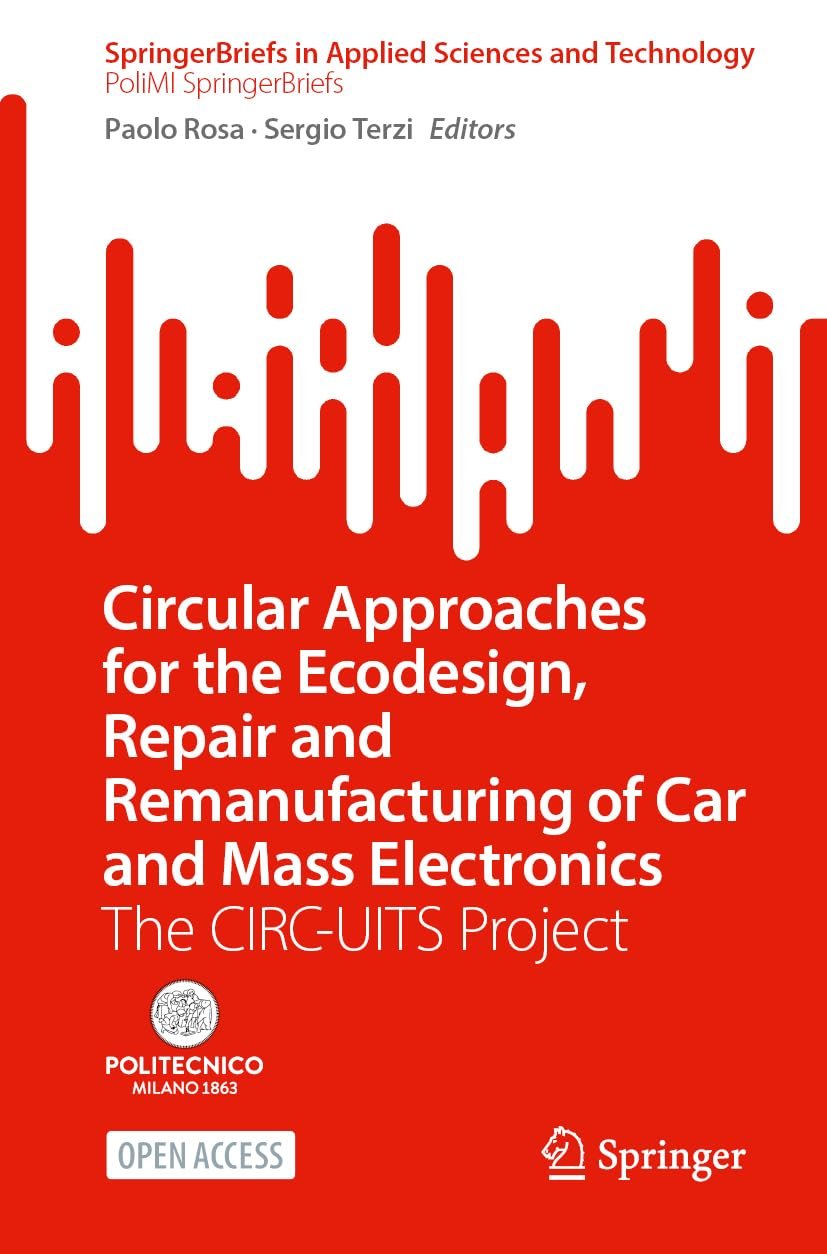
Circular Approaches for the Ecodesign, Repair and Remanufacturing of Car and Mass Electronics: The Circ-uits Project
Discover why Circular Approaches for the Ecodesign, Repair and Remanufacturing of Car and Mass Electronics: The Circ-uits Project stands out among similar products.
Learn about its key features, benefits, and real performance.
What Makes Circular Approaches for the Ecodesign, Repair and Remanufacturing of Car and Mass Electronics: The Circ-uits Project Special?

Review of "Circular Approaches for the Ecodesign, Repair and Remanufacturing of Car and Mass Electronics: The CIRC-UITS Project"
Introduction
In an era where sustainability is not just a buzzword but a pressing necessity, the book Circular Approaches for the Ecodesign, Repair and Remanufacturing of Car and Mass Electronics: The CIRC-UITS Project emerges as an important resource. This open-access publication, set to be released on December 3, 2025, under the aegis of Springer Nature, presents insights from the CIRC-UITS project—a forward-thinking initiative supported by the European Union’s Horizon Europe programme. The book highlights how circular economy principles can fundamentally benefit the automotive and electronics sectors, focusing on resource efficiency, eco-design, and reducing environmental footprints.
Key Features and Usability
Detailed Frameworks for Circularity
One of the book’s standout features is its comprehensive framework addressing circularity in electronic and automotive industries. Throughout its 158 pages, readers gain insights into the methodologies and decision-support tools developed for assessing the sustainability and circularity performance of existing practices. This provides not just theoretical knowledge but practical applications, making it a valuable resource for both industry professionals and academics.
Digital Technologies Integration
The CIRC-UITS project emphasizes the role of digital technologies in enhancing circular practices. The book delves into how digital twins, augmented reality applications, and sophisticated web platforms can be harnessed to recover materials from waste products and support the remanufacturing of electronic components. By explaining these technologies intricately, the authors provide a roadmap for industries looking to adopt innovative solutions in their circular economy strategies.
Pilot Projects
The publication showcases several pilot projects, including initiatives focusing on Electronic Control Units (ECU), Tire Pressure Monitoring Sensors (TPMS), In-Mold Electronics (IME), and the sorting of obsolete Printed Circuit Boards (PCB). These case studies exemplify real-world applications of circular methodologies, helping readers to visualize impactful changes within their industries.
Quality, Materials, and Design
Scholarly Rigor
While the subject matter is highly technical, the writing maintains an accessible tone. Each chapter is meticulously crafted, combining scholarly rigor with practical applicability. The authors have successfully compiled results and recommendations that could steer organizations toward adopting a circular economy. Its layout and design facilitate easy navigation, ensuring that complex ideas are presented clearly.
Visual Elements
The book contains diagrams, illustrations, and case study examples that enhance understanding. These visual elements break up text-heavy sections and allow readers to grasp difficult concepts more intuitively, making the subject less daunting.
Strengths and Weaknesses
Strengths
-
Comprehensive Coverage: The book covers all aspects of circularity, from theoretical frameworks to practical applications, making it a one-stop resource for professionals in automotive and electronic industries.
-
Cutting-edge Technologies: By highlighting the integration of technologies like digital twins and AR, it conveys a forward-looking approach that aligns well with modern trends toward digitization.
-
Real-world Applications: The inclusion of pilot projects illustrates the challenges and successes in real implementations of circular practices. The book offers valuable lessons that can be applied across different industries.
- Access and Availability: Being an open access publication makes it easily accessible to a wide audience, breaking down barriers to information that often come with traditional academic publications.
Weaknesses
-
Technical Complexity: While the book is designed to be accessible, some sections may still be too technical for readers without a solid background in environmental science or engineering.
-
Limited Scope: The focus on specific sectors, while beneficial, may alienate readers from other industries that are seeking sustainable practices but could benefit from circular economy strategies.
- Future Implications: Although it showcases current practices and technologies, the text could expand on long-term implications and future advancements within the circular economy framework.
Ideal User Type and Best Use Cases
Target Audience
The CIRC-UITS project’s findings are designed for a diverse range of professionals, including:
-
Industry Professionals: Engineers, project managers, and decision-makers in automotive and electronics sectors will find valuable insights on implementing circular practices.
-
Academics and Researchers: Those studying sustainability, environmental science, or circular economies will benefit from the thorough research analyses and methodologies presented.
- Policy Makers: This book can serve as a guide for regulators and policy makers focused on creating frameworks that encourage sustainable practices within industries.
Best Use Cases
-
Corporate Training: Organizations aiming to educate their workforce on circular economy principles can use this book as a training resource.
-
Research Projects: Academic institutions can incorporate this book into their syllabus or research programs to broaden discussions around sustainability.
- Strategic Planning: Businesses looking to pivot towards more sustainable practices can utilize insights from the book to develop strategies that align with circular economy principles.
Conclusion
CIRC-UITS: Circular Approaches for the Ecodesign, Repair and Remanufacturing of Car and Mass Electronics presents critical insights into the growing importance of circular economies in two of the most resource-intensive sectors: automotive and electronics. By providing a thorough examination of methodologies, digital tools, and pilot programs, this book serves as a vital reference point for professionals across various fields. While there are limitations in terms of technical complexity and scope, the strengths far outweigh these downsides. The book is an essential guide that not only discusses the importance of sustainability but also lays down practical pathways to achieve it.
In conclusion, whether you are an academic, industry professional, or policymaker, this book is a pivotal resource for anyone looking to understand and implement circular economy practices in today’s fast-evolving landscape.
Why Choose Circular Approaches for the Ecodesign, Repair and Remanufacturing of Car and Mass Electronics: The Circ-uits Project
- ✅ Designed for convenience and reliability
- 🔍 Offers features that stand out from competitors
- ⚙️ Built with durable, high-quality materials
- 💰 Provides excellent value for the price
Tags
#Circular #Approaches #Ecodesign #Repair #Remanufacturing #Car #Mass #Electronics #Circuits #Project