

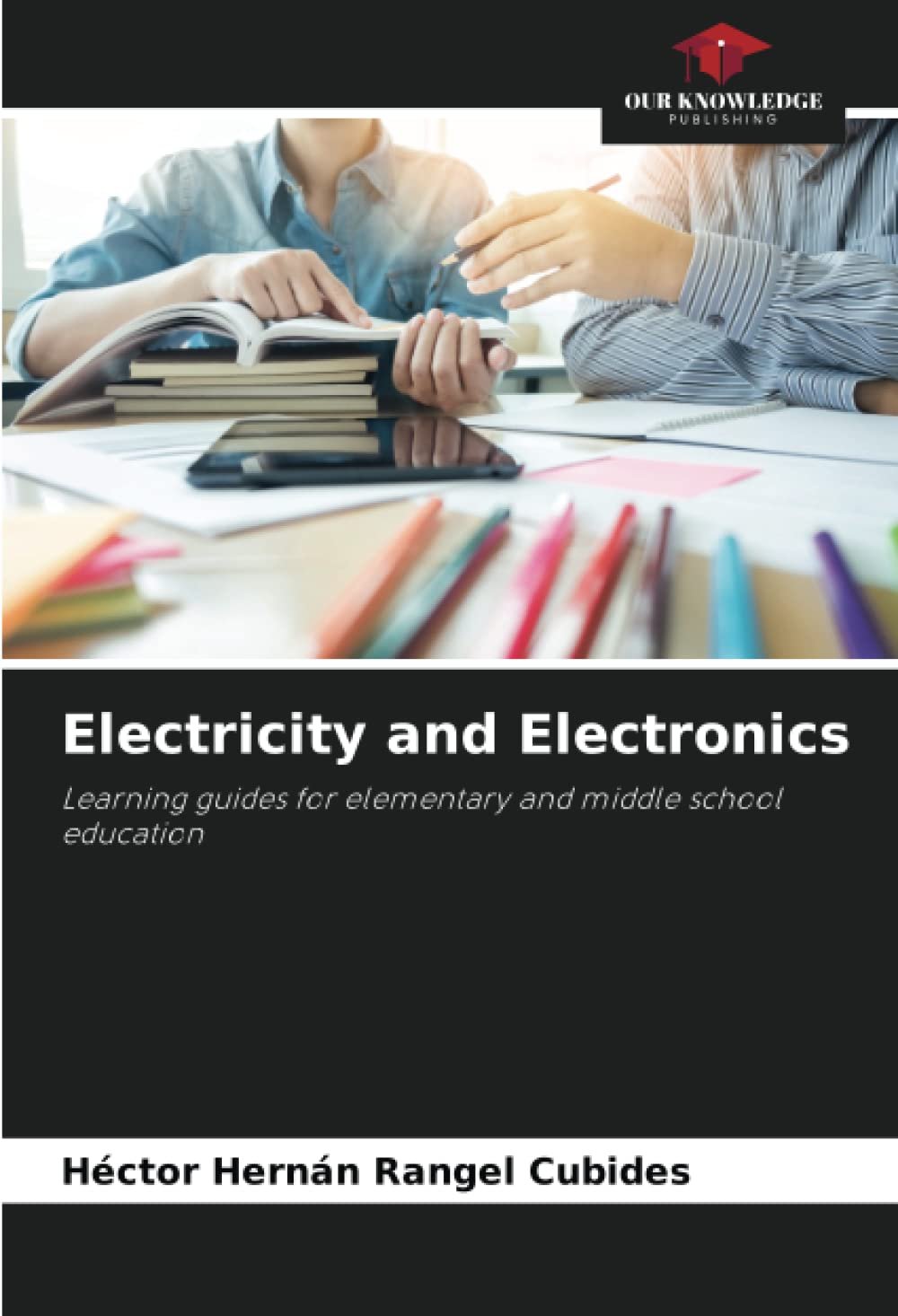
Electricity and Electronics: Learning guides for elementary and middle school education
Discover why Electricity and Electronics: Learning guides for elementary and middle school education stands out among similar products.
Learn about its key features, benefits, and real performance.
What Makes Electricity and Electronics: Learning guides for elementary and middle school education Special?

Review of "Electricity and Electronics: Learning Guides for Elementary and Middle School Education"
In a world that has rapidly shifted to online and remote learning, especially with the onset of the Covid-19 pandemic, educators have had to adapt in remarkable ways. One such innovative solution has come in the form of "Electricity and Electronics: Learning Guides for Elementary and Middle School Education," published by Our Knowledge Publishing on November 29, 2022. This resource aims to bridge the learning gap for students who face challenges due to limited connectivity, particularly in remote areas.
Key Features and Usability
Comprehensive Coverage of Electrical Concepts
The learning guides delve into essential topics within the realm of electricity and electronics, making it an ideal resource for students aged 10-14. The curriculum includes:
- Electrical Resistance: Understanding how resistance affects electrical flow.
- Nominal and Real Value of Electrical Resistors: Differentiating between theoretical and actual measurements.
- Equivalent Resistance Calculations: Techniques for series, parallel, and mixed connections, providing a solid foundation for understanding complex circuits.
- Voltage, Current, and Power Calculations: Simplified approaches to grasping vital electrical concepts.
- Introduction to Kirchhoff’s Laws: A glimpse into advanced concepts makes this guide both introductory and progressive.
These topics not only align with STEM (Science, Technology, Engineering, and Mathematics) educational standards but also facilitate a hands-on approach to learning through practical examples. Each section is designed to progressively deepen the student’s understanding, making it a versatile resource that can cater to diverse learning styles.
User-Friendly Design
The guide spans 100 pages and is structured in an easy-to-follow format. Each section begins with clear objectives, followed by explanations illustrated with diagrams and examples that cater to visual learners. There are also practice questions and activities that teachers can assign, allowing students to engage meaningfully with the content.
The book’s dimensions (15 x 0.58 x 22 cm) make it portable and easy to handle, making it a convenient addition to any educational toolkit. Although each guide aims to be comprehensive, the concise format allows for focused study sessions without overwhelming the student with excessive information.
Quality, Materials, and Design
The quality of the publication itself holds up well under scrutiny. The pages are durable, which is particularly useful in a classroom setting where materials are often handled by multiple students. The print quality is clear, with well-defined diagrams that effectively illustrate complex electrical concepts.
The design is visually appealing yet functional, with diagrams that break down information into digestible parts. There’s a balance between text and visuals, facilitating better engagement and understanding.
Strengths
1. Accessibility
One of the most significant strengths of these learning guides is their accessibility. The guide is designed for students who may not have reliable internet access, which is a crucial consideration in many public education systems. With the availability of teacher support via WhatsApp or telephone, students receive additional guidance, further enhancing their learning experience.
2. Practical Approach
Incorporating real-life applications and examples makes complex concepts easier to comprehend. Students can relate what they are learning to everyday situations, making the material more engaging and relevant.
3. Flexibility
These learning guides can be utilized in various educational settings, whether as a primary textbook for remote study or as a supplement to traditional classroom learning. They can serve students with different levels of understanding, allowing teachers to customize their teaching methods based on individual needs.
Weaknesses
1. Limited Depth for Advanced Learners
While the guide serves as an excellent resource for elementary and middle school students, it may not cover enough depth for advanced learners seeking a more rigorous exploration of the subject matter. Students with a strong background in electricity and electronics may find the content a bit basic.
2. Lack of Interactive Elements
Though the guide provides practical exercises, it lacks interactive online components that could enhance the learning experience. Incorporating interactive content could foster more engagement, especially in today’s digital age.
3. Limited Scope
The guide focuses primarily on basic electrical concepts, which might leave students looking for advanced topics wanting more. This limitation may necessitate supplemental resources for those aiming to pursue further education in electronics or engineering fields.
Ideal User Type and Best Use Cases
Ideal User Type
"Electricity and Electronics: Learning Guides for Elementary and Middle School Education" is geared toward:
- Elementary and Middle School Students: Those who are just starting to explore the world of electricity and need a solid foundational resource.
- Teachers in Remote Areas: Educators looking for a structured, easy-to-use curriculum that meets the needs of students with limited connectivity.
- Parents Assisting with Home Learning: The guide provides a framework for parents who may wish to assist their children with science education at home.
Best Use Cases
-
Homeschooling: This guide is an excellent resource for families engaging in homeschooling, particularly during times when traditional schooling might not be an option.
-
Remote Learning: In areas with connectivity challenges, this guide can function as a standalone learning tool, ensuring students still receive crucial educational content.
- Supplementary Education in Classrooms: Teachers can use this guide to enrich their science curriculum, offering additional activities and exercises to enhance student engagement.
Conclusion
In conclusion, "Electricity and Electronics: Learning Guides for Elementary and Middle School Education" stands out as a practical and valuable resource for educators and students alike. Its user-friendly design, comprehensive coverage of essential topics, and focus on accessibility make it a timely solution for the challenges posed by the Covid-19 pandemic, especially in under-resourced areas.
While it may lack advanced content and interactive elements that modern learners often seek, its core strengths provide undeniable value to elementary and middle school education. As teachers navigate the complexities of today’s educational landscape, this guide is a solid asset to consider for fostering an understanding of fundamental electrical concepts among young learners.
Why Choose Electricity and Electronics: Learning guides for elementary and middle school education
- ✅ Designed for convenience and reliability
- 🔍 Offers features that stand out from competitors
- ⚙️ Built with durable, high-quality materials
- 💰 Provides excellent value for the price
Tags
#Electricity #Electronics #Learning #guides #elementary #middle #school #education