

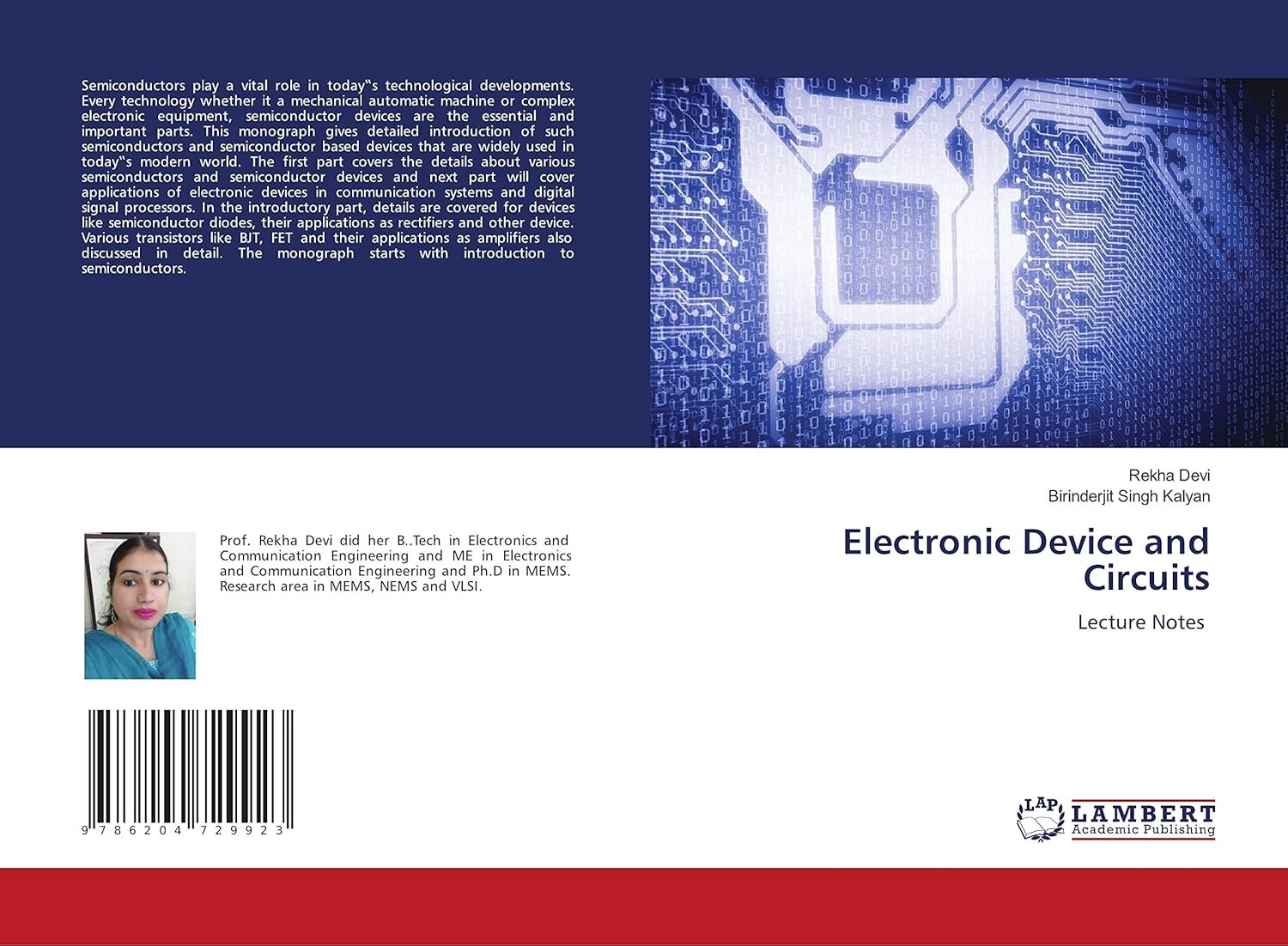
Electronic Device and Circuits: Lecture Notes
Discover why Electronic Device and Circuits: Lecture Notes stands out among similar products.
Learn about its key features, benefits, and real performance.
What Makes Electronic Device and Circuits: Lecture Notes Special?

Review of "Electronic Device and Circuits: Lecture Notes"
In an era where technology evolves at a breakneck pace, a thorough understanding of the fundamental building blocks – semiconductors – has become not just beneficial but absolutely essential. "Electronic Device and Circuits: Lecture Notes" presents itself as a critical resource for those keen to delve into this vital area of electronics. Here, we’ll explore the key features, strengths, weaknesses, and target audience for this comprehensive monograph.
Key Features and Usability
The "Electronic Device and Circuits: Lecture Notes" monograph offers a systematic approach to understanding semiconductors and their applications. Here are some of its standout features:
-
Systematic Breakdown of Semiconductors: The book begins with a clear and concise introduction to semiconductors, laying the groundwork for novice students and experienced professionals alike. It covers essential topics like band theory, intrinsic and extrinsic semiconductors, and the p-n junctions, which are critical for any budding electronics engineer.
-
Detailed Description of Devices: After establishing the foundation, the book transitions into various semiconductor devices. The discussions include essential components like semiconductor diodes, bipolar junction transistors (BJTs), and field-effect transistors (FETs). Each device is explained with clarity, making it easy for readers to grasp complex concepts.
-
Real-World Applications: One of the key strengths of this monograph is its focus on practical applications. It expands on how these devices function in real-world scenarios, especially within communication systems and digital signal processing. This makes the concepts more relatable and underscores their importance in modern technology.
-
Illustrative Examples and Diagrams: Accompanying diagrams and examples throughout the book enhance understanding. Visual aids help underscore complex relationships and processes, providing students with a multi-dimensional view of the topics discussed.
- Accessibility of Language: The author’s choice of language makes the topic approachable without compromising on depth. Technical jargon is adequately explained, ensuring that even those without a deep prior knowledge can follow along.
Quality, Materials, and Design
The monograph excels in quality, both in terms of content and physical presentation:
-
Content Quality: The information presented is not only rigorously researched but also reflective of current developments in semiconductor technology. The writing is structured, progressing from foundational concepts to more advanced topics seamlessly.
-
Material Quality: If you opt for a printed version, you will find the book is well-printed on sturdy paper, making it a desirable addition to any student’s library.
- Design Elements: While the text is primarily educational, the layout is user-friendly. The way in which the content is organized allows readers to move through chapters fluidly, with logical flow in discussion facilitating retention of concepts.
Strengths and Weaknesses
Strengths:
-
Comprehensive Coverage: The book comprehensively covers the basic and advanced components of electronic devices, which makes it suitable for both beginners and advanced learners.
-
Practical Insight: Its focus on applications in communication systems enhances its practical relevance. As technology becomes increasingly integrated into every aspect of modern civilization, understanding these applications proves vital.
-
User-Friendly: The clear language and systematic approach to complex ideas make it an ideal resource for students and self-learners.
- Illustrative Tools: Diagrams and example problems effectively reinforce learning material, catering to different learning styles.
Weaknesses:
-
Depth vs. Breadth: While the text covers a wide range of topics, some readers might find that certain advanced topics are mentioned briefly without deep exploration. This limitation can leave experienced learners seeking a more in-depth treatment on specific semiconductor technologies.
-
Limited Problem Sets: Some users may desire more hands-on practice problems, which could further reinforce comprehension. While explanations are thorough, practical exercises could help reinforce theoretical concepts.
- Target Audience Niche: This monograph may not be ideal for complete beginners or those solely interested in applied electronics. Its focus on semiconductor theory could be overwhelming for individuals without any prior exposure to the subject.
Ideal User Type and Best Use Cases
Given its content and approach, the "Electronic Device and Circuits: Lecture Notes" is ideal for:
-
Engineering Students: College students studying electronics or electrical engineering will find this book serves as an excellent supplemental material or even a core reference for coursework.
-
Practitioners and Researchers: Engineers and researchers working in semiconductor technology will appreciate the detailed descriptions and insights into applications, thus helping in real-world problem-solving scenarios.
- Self-Learners: Individuals taking the initiative to learn about semiconductors independently will find the comprehensive explanations and relatable examples informative.
Best Use Cases:
-
Course Reference: This book could serves as a textbook for a university-level semiconductor course, providing foundational knowledge that can be built upon in more advanced studies.
-
Supplemental Learning: For professionals in the field who need a refresher course or additional insight into semiconductor applications, this monograph deliver insights relevant to ongoing projects.
- Study Guide: Those preparing for exams in topics related to electronic devices will benefit from the structured layout and comprehensive coverage of relevant knowledge.
Conclusion
In summary, "Electronic Device and Circuits: Lecture Notes" stands out as a valuable text in the realm of electronics and semiconductor technology. It blends comprehensive coverage with practical application effectively, making it suitable for a variety of learners. While it does have its limitations in depth on certain advanced components, its accessibility, practical focus, and clarity make it a worthwhile addition to the library of anyone interested in modern electronic devices. Whether you’re a student, a professional in the field, or an aspiring self-learner, this monograph will equip you with the knowledge and tools necessary to navigate the increasingly complex world of electronic devices and circuits.
Why Choose Electronic Device and Circuits: Lecture Notes
- ✅ Designed for convenience and reliability
- 🔍 Offers features that stand out from competitors
- ⚙️ Built with durable, high-quality materials
- 💰 Provides excellent value for the price
Tags
#Electronic #Device #Circuits #Lecture #Notes